SpaceX IPO 2026: What the Historic SPCX Listing Means for Startups, Investors, and the AI-Space Economy
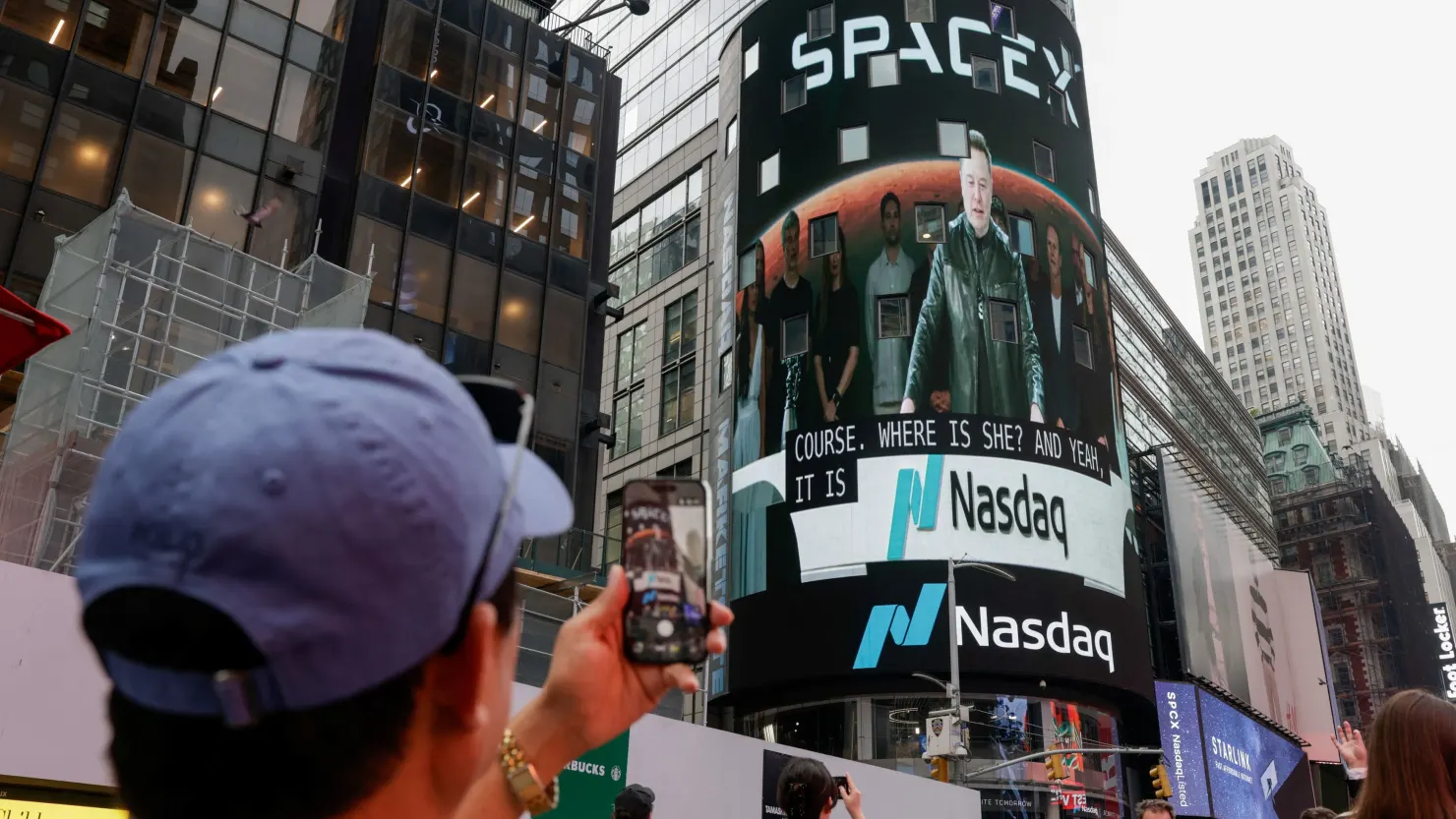
SpaceX priced at $135, opened at $150 under the ticker SPCX, and became one of the most valuable listed companies on earth within hours. But the story is not really about the IPO. It is about what public markets are now willing to pay for, and why that changes the calculus for every founder building infrastructure, AI, or deeptech anywhere in the world. Here is the read you will not get from the wire coverage.
SPCX Is Not a Normal IPO
SpaceX had been rejecting IPO requests from bankers for over a decade. Musk's stated reason was always the same: quarterly earnings pressure would destroy long-cycle rocket development. What changed in 2026 was not the company. It was the capital market. Investors had spent three years watching private AI infrastructure companies stay private at absurd valuations. SpaceX was the scarce, proven alternative, and the scarcity premium drove the opening pop as much as any fundamental.
What Actually Happened, and What the Numbers Mean
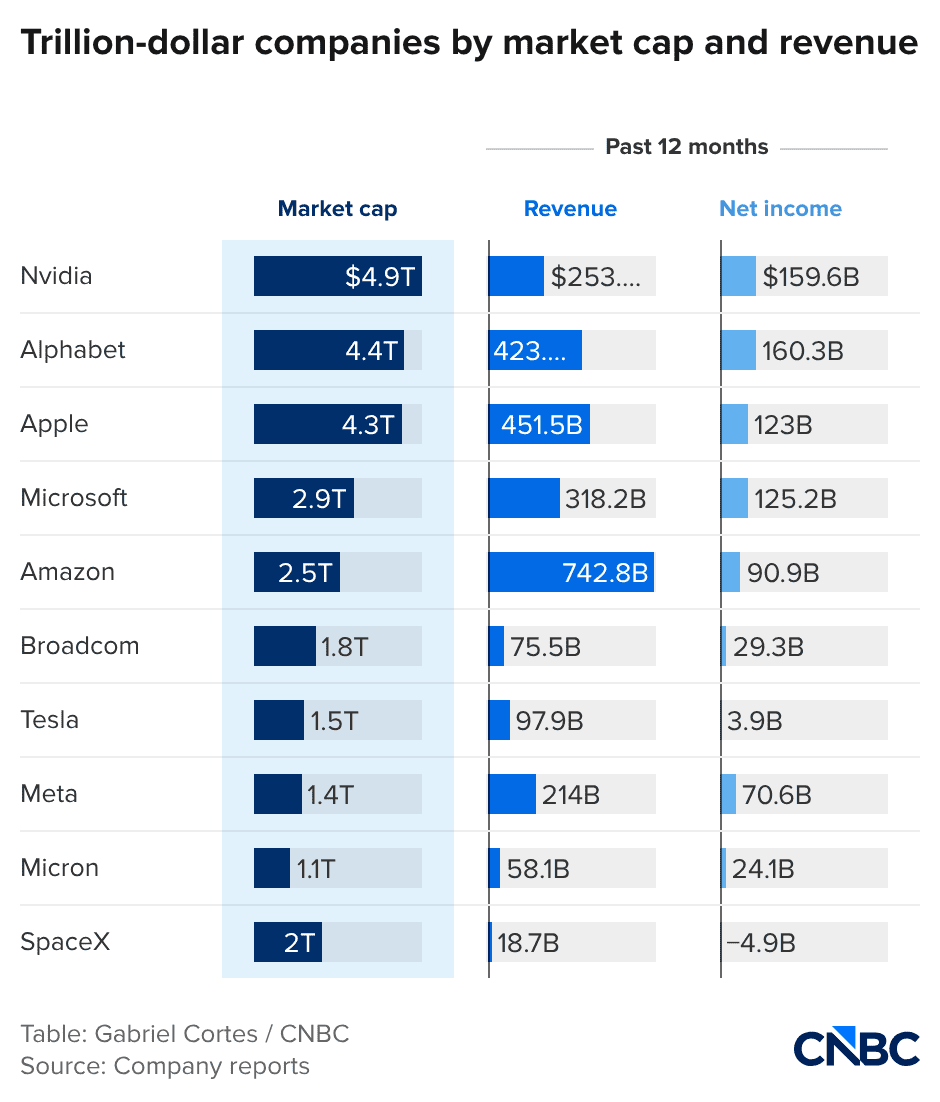
On June 12, 2026, SpaceX began public trading under the ticker SPCX. CNBC tracked the debut live, while Forbes reported the stock surging 17% above IPO price on open. Most financial press covered it as a market event. We think the more important story is structural: SPCX is the first publicly traded company that forces investors to price three separate trillion-dollar sectors simultaneously (launch infrastructure, satellite telecom, and AI compute optionality) in a single stock. There is no clean comparable. That absence of comparables is exactly why the debate about valuation will run for years.
The other thing worth noting: most retail investors did not actually buy at $135. Institutional allocations filled the IPO book. Retail participation opened at $150 and above. That gap matters. The New York Times framed this as a broader stock-market inflection, not just a listing, because for the first time, everyday investors can hold a stake in the company that controls the commercial launch market, the fastest-growing satellite internet network, and the only proven reusable heavy-lift rocket platform. The psychological premium attached to that access is real. Whether it is a fair price is a different question.
| Metric | Reported Figure | Why It Matters |
|---|---|---|
| IPO price | $135 per share | Set the baseline for valuation and first-day performance. |
| Opening trade | $150 per share | Showed immediate demand above the IPO price. |
| Ticker | SPCX | Made SpaceX directly accessible to public-market investors. |
| Listing venue | Nasdaq | Positioned SpaceX with the market's largest technology growth names. |
| Market debate | Growth vs valuation risk | Investors are pricing decades of future infrastructure, not only current earnings. |
This article is an analysis of public market coverage and is not investment advice. IPO prices and intraday valuations can change quickly.
Why This IPO Matters Beyond SpaceX
The last time a listing redrew the map of investable infrastructure was Saudi Aramco in 2019. Before that, Alibaba in 2014. Both moved capital into asset classes that previously felt out of reach for public market investors. SPCX does the same for the next infrastructure era: space-based connectivity, reusable orbital access, and what the market is increasingly calling the physical internet: the layer of hardware and bandwidth that AI workloads will eventually run on at planetary scale.
That thesis is speculative. But it is not baseless. Starlink already serves over four million subscribers across 100-plus countries. SpaceX has completed more orbital launches than any government space program in history. The commercial NASA contract pipeline is multi-billion dollar and growing. This is not a pre-revenue bet on a founder's vision. It is a bet on a company that has already won rounds one and two and is now asking investors to fund rounds three through ten.
Reusable Launch Moat
SpaceX can land and re-fly boosters in under 24 hours. No competitor is within five years of matching that unit economics. The moat is operational, not just technological.
Starlink as the Cash Engine
Satellite internet converts infrastructure capex into recurring consumer revenue. That subscription layer is what funds Starship development and the long-duration bets. Without Starlink, the story is a lot harder to price.
The AI Infrastructure Wildcard
Low-earth orbit satellites can distribute AI compute to regions where ground-based data centers are not viable. Whether SpaceX becomes an AI infrastructure play depends on execution, but the market is clearly pricing that optionality in already.
The honest version: most of the SPCX valuation premium is not about today's revenue. It is about option value: the possibility that one company ends up as the backbone of connectivity, compute, and transport for the next phase of global technology. That is an extraordinary claim. The IPO is a bet that it is not an unreasonable one.
What SPCX Investors Are Actually Buying
Think of SPCX as four separate businesses bundled into one ticker, each at a different stage of maturity. The mistake most retail investors make is valuing only the first one.
- The launch business (mature, profitable): Commercial and government satellite launches. Proven revenue, operational margin improving with each reuse cycle. This part of SpaceX is worth a lot on its own. The IPO price likely reflects this at fair value or above.
- Starlink (scaling, cash-generative): Four million-plus subscribers. Monthly recurring revenue. Expansion into maritime, aviation, and enterprise. This is the business that makes the SpaceX story fundable without needing to believe in Mars. It is also the business that most analysts are underwriting when they build a bull case.
- Government and defense contracts (durable, growing): NASA Artemis program, U.S. military space contracts, allied nation partnerships. Long-duration, inflation-linked, strategically hard to cancel. This layer de-risks the commercial cyclicality.
- Future optionality (unpriced, speculative): Starship as a point-to-point transport system, orbital refueling depots, space-based AI compute infrastructure, Mars colonization. None of this generates revenue today. All of it is in the stock price if you believe the valuation. This is where the disagreement lives.
Traditional DCF models break down here because three of those four businesses have cash flows you can model and one has a range from zero to civilization-changing. Serious investors do not try to price the optionality precisely. They decide how much of a premium they are willing to pay to hold the ticket to that future, and whether the current price leaves any margin of safety. At $150 open, that margin was thin.
The Risks That Will Not Be in the Analyst Reports
The bear case on SPCX is not that SpaceX will fail. It is that SpaceX will succeed, just more slowly and expensively than the IPO price implies. Here are the five risks worth tracking seriously, not just as disclaimers.
- The float trap: If SpaceX only released a small percentage of shares at IPO, price discovery is distorted. A thin float creates volatility that does not reflect business performance. Retail investors who buy into an early surge may be buying from institutional sellers who got in at $135 and are taking profits at $170. The underlying business may be unchanged.
- Starlink competition is coming: Amazon's Project Kuiper and OneWeb are scaling. Governments are funding national satellite broadband programs. If Starlink's pricing power erodes in five years, the recurring revenue story looks different, and so does the valuation.
- Capital intensity has no ceiling: Starship costs billions per development cycle. Building out orbital infrastructure, expanding Starlink's constellation, and maintaining launch cadence requires continuous heavy reinvestment. SpaceX has managed this as a private company with patient capital. Public markets are less patient.
- Key-person concentration: Elon Musk's attention, reputation, and decision-making are central to SpaceX's operational culture. His other ventures, and the controversies that follow him, are now material risks for a publicly traded SPCX. This is not theoretical. It is the governance question every institutional investor will model.
- Regulatory and geopolitical exposure: Space is increasingly a domain of national competition. Starlink's role in military conflicts has already created diplomatic friction. Orbital spectrum allocation, launch licensing, and international agreements are all areas where government decisions could constrain SpaceX's expansion, and none of them are in a financial model.
The right framing for a retail investor: do you admire SpaceX? Almost certainly. Is that admiration worth paying a premium at current valuation? That is a separate, harder question. Great companies and great investments are not the same thing at every price.
Building a Fundraising or Valuation Story?
The SpaceX IPO is a reminder that capital rewards credible narratives only when they are backed by execution, numbers, and timing. Naraway helps founders sharpen their business model, pitch, valuation logic, and investor-readiness before the market asks harder questions.
Explore Startup Valuation SupportWhat Founders Should Actually Take Away From This
Most startup founders will not build SpaceX. But the SpaceX story contains a set of specific, transferable lessons about how value compounds, and how it gets destroyed. These are worth reading carefully, because they apply to a ₹10 crore startup as much as a $200 billion one.
1. You cannot narrative your way past weak operations forever
SpaceX had a story that could have run on hype for years. It did not. Musk obsessed over cost-per-kilogram to orbit, reuse cadence, and launch reliability before the PR machine got going. The brand followed the operational excellence, not the other way around. Founders who build narrative before product are taking a bet that investor patience will last. It usually does not. Build the thing that works first, then explain why it matters.
2. The cash engine earns you the right to the dream
Starlink exists, in part, because SpaceX needed recurring revenue to fund Starship without burning through investor capital every 18 months. That constraint, the need for a cash engine, forced a discipline that ultimately made the whole business more fundable. Founders chasing big visions should ask: what is the adjacent, nearer-term revenue stream that buys us time to reach the real prize? The answer is rarely glamorous. It is almost always necessary.
3. Public markets punish weak explanations more than weak quarters
A bad quarter is a bad quarter. But an unexplained bad quarter, or a business that cannot clearly articulate how today's spend connects to tomorrow's return, creates a valuation discount that compounds. SpaceX spent years telling a consistent, verifiable story about its cost curve and launch cadence. Founders preparing for any form of institutional capital, not just IPOs, should invest in the quality of their financial narrative at least as much as they invest in their pitch deck.
Before you can list or raise, you need a clean legal foundation. Naraway handles company registration, compliance, and DPIIT recognition so your structure is investor-ready from day one.
Get Your Startup Registered4. Timing is not luck: it is pattern recognition
The SpaceX IPO happened when institutional capital was actively searching for physical infrastructure plays to balance AI software exposure. Musk and his team read that window correctly. Founders who time their fundraise or listing to a market moment of genuine demand, not just when they need money, consistently get better outcomes. This requires watching the macro as a founder, not just your own metrics. It means building relationships with investors 12 months before you need them, so you understand when the window is open.
The India Angle, and Why This Is a Signal, Not Just a Story
Indian founders should read the SPCX listing as a directional signal about where global capital is moving, because a version of this story is playing out in India right now.
IN-SPACe, the Indian government's space commercialization body, has been opening the sector to private players since 2020. Companies like Skyroot Aerospace and Agnikul Cosmos have already completed first launches. The Chandrayaan-3 success elevated India's credibility in space internationally. ISRO's commercial spin-off, NewSpace India Limited, is actively building a launch-as-a-service pipeline. This is not peripheral. India is in the early innings of becoming a serious player in the commercial space economy, and the SpaceX IPO will pull institutional attention toward that category globally.
More broadly, the lesson for Indian founders in deeptech, defense, AI infrastructure, climate, and logistics is the same lesson Musk applied: the businesses that attract the highest valuations are those that own a critical layer of infrastructure that others cannot easily replicate. Whether that is a satellite, a port, a payments rail, or an AI model is less important than the underlying question: do you control something essential? That is what the market is pricing at a premium right now.
Founders preparing to raise capital should read this alongside Naraway's analysis of startup valuation methods in 2026, how to justify valuation to investors, and India startup funding trends.
Indian founders building tech products and SaaS platforms can move faster with the right development partner. Naraway builds custom web apps, AI integrations, and MVPs for startups that need to ship quickly.
Explore Tech ServicesOur Read
The SpaceX IPO is the clearest signal in years that public markets have expanded what they are willing to pay for. Not just software margins. Not just AI upside. But physical infrastructure that controls access to a technology layer (launch, connectivity, compute) that the next century of economic activity will depend on. That is a structural shift in how capital allocates, and it will reach beyond SPCX into every sector where infrastructure ownership creates durable advantage.
For investors: SPCX at $150 open is a high-conviction, high-expectation position. The company is extraordinary. The price at IPO reflected that. Whether it reflected it accurately is the question that only the next 3-5 years will answer. We would rather own it at a pullback than chase it on day one. But we would not bet against it over a decade.
For founders: the SpaceX story is not a story about rocket science. It is a story about staying private long enough to prove your model, building a recurring-revenue engine that buys you time for the big bet, and listing into a market that already knows your name. None of those things require billions of dollars to start. They require patience and sequencing. That is a template any founder can borrow.
If the SpaceX story has you thinking about your own startup's structure, readiness, or growth path, Naraway works with early and growth-stage founders on registration, compliance, tech, and scaling.
Work With NarawaySources
Reported figures and facts are drawn from the press coverage below. The analysis, interpretation, and founder perspective are Naraway's own.
Frequently Asked Questions
What is the SpaceX IPO ticker?
SpaceX began trading under the ticker SPCX on Nasdaq, according to market coverage of the 2026 IPO.
What was the SpaceX IPO price?
Market coverage reported an IPO price of $135 per share and an opening trade at $150 per share.
Why is the SpaceX IPO considered historic?
It brought one of the world's most valuable private technology companies into public markets and combined space launch, Starlink, AI infrastructure, and long-term space economy optionality in a single listed company.
Should retail investors buy SPCX stock immediately?
This article is not investment advice. Retail investors should consider valuation, volatility, public float, financial fundamentals, time horizon, and risk tolerance before buying any IPO stock.
What is the biggest startup lesson from the SpaceX IPO?
The biggest lesson is that narrative earns premium value only when it is supported by years of execution, infrastructure, distribution, and credible monetization.