Quick Answer
Content without distribution is a dead asset. Founders confuse publishing with systems, activity with results. Here's why content ROI fails and how to fix it.
How This Guide Was Prepared
This guide was prepared by the Naraway editorial team using founder execution patterns, public market references, and practical operating experience from startup support work. It is designed to help readers make better decisions, not to manipulate search rankings.
Last reviewed: May 2026. Publisher: Naraway. Review focus: clarity, usefulness, factual consistency, and founder actionability.
A B2B SaaS founder published 50 blog posts in six months. SEO-optimized titles, keyword research completed, consistent posting schedule. Google Search Console showed 15,000 monthly impressions. The founder was thrilled—until they checked conversions.
Zero demo requests from organic traffic. Zero sales inquiries. Zero hiring applications. Fifty pieces of content, thousands of visitors, and exactly zero business outcomes.
The founder's question: "We're doing everything the content gurus say. Why isn't it working?"
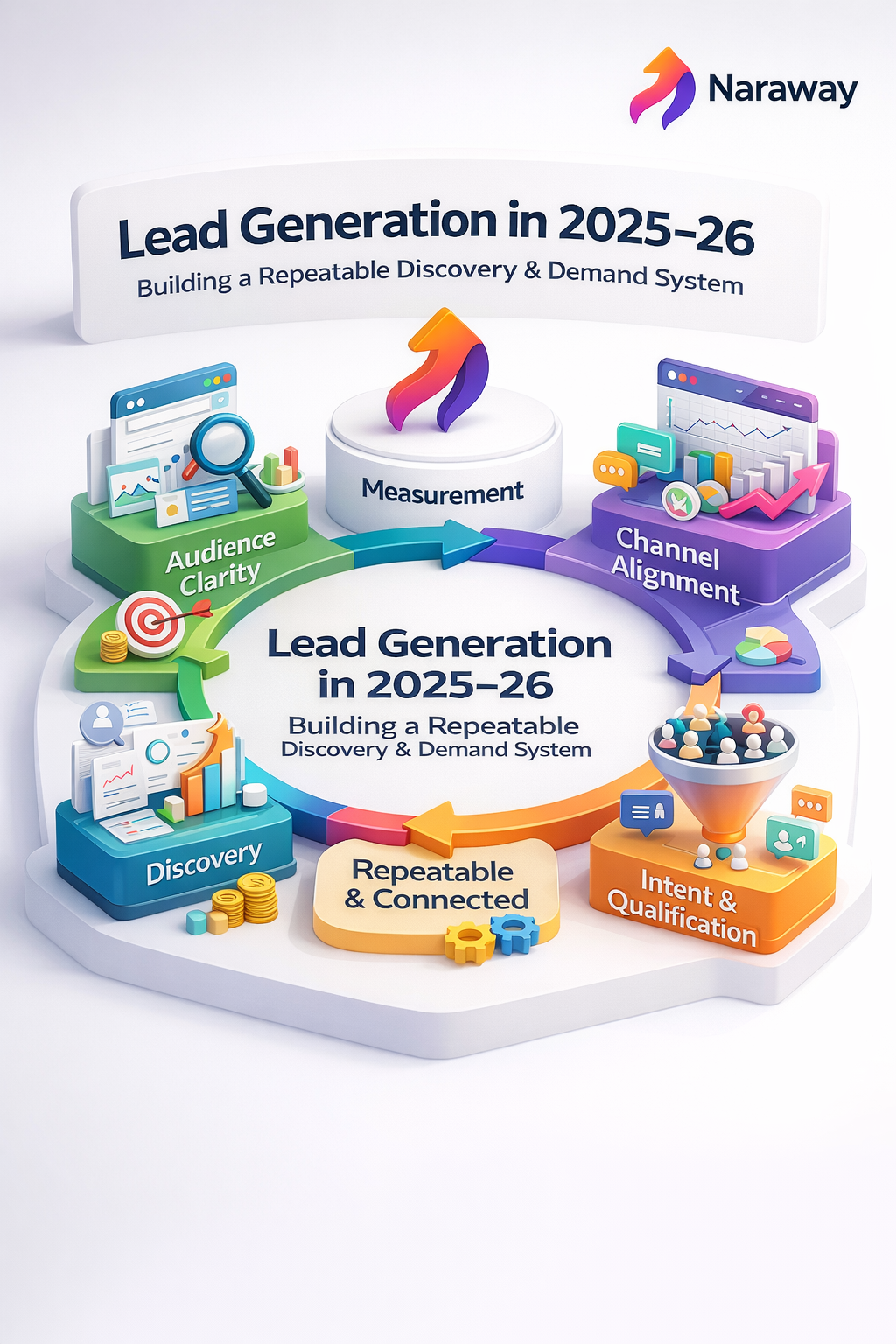
This is the pattern we see repeatedly. Founders invest heavily in content based on success stories, publish consistently, watch traffic grow, then wonder why revenue doesn't follow. The problem isn't naivety. It's structural misunderstanding of what makes content convert.
Why Founders Expect Content to "Just Work"
The content marketing advice ecosystem is incomplete by design. It highlights successes while obscuring the infrastructure that enabled those successes.
Social media narratives inflate success stories. LinkedIn is full of founders crediting content for explosive growth. "We wrote 20 blogs and 10X'd our pipeline." What they don't mention: the enterprise sales team, the paid distribution budget, the PR relationships, the existing brand that gave content traction.
Survivorship bias from VC-backed brands makes the pattern worse. HubSpot's content success gets studied endlessly. Their $100M+ marketing budget and 15-year headstart don't. Buffer's transparency about content ROI gets cited constantly. The fact that they started content in 2010 when competition was minimal gets ignored.
Confusion between brand content and demand content. Founders see Stripe's excellent technical documentation and think "we need great content too." But Stripe's content serves existing demand—people already want to use Stripe and need help implementing it. That's different from creating demand through content, which is what most startups need.
The 5 Reasons Founders Overestimate Content ROI
1. They Confuse Traffic With Demand
SEO traffic and buying intent are different things. A blog ranking #1 for "startup hiring tips" attracts founders researching hiring approaches. That's valuable awareness. But those readers aren't actively looking to hire a recruitment partner today. Naraway sets up your startup entity so your marketing spend goes to growth, not legal hassles
Compare that to "hire recruitment agency India"—a keyword with clear commercial intent. Lower volume, but every visitor is evaluating solutions now. Top-of-funnel content creates awareness. Bottom-of-funnel keywords capture existing demand.
Most startup content targets top-of-funnel keywords because they have higher search volume. This inflates traffic metrics while generating minimal conversions. The traffic is real. The demand is elsewhere.
2. No Distribution System
Publishing is not distribution. This is the #1 reason content ROI disappoints. Founders write content, hit publish, and wait for Google to send traffic. That's like manufacturing products and waiting for customers to discover your warehouse.
Distribution requires infrastructure: Internal linking that guides readers from awareness content to conversion pages. Outbound ecosystem linking where you contribute to conversations in platforms where your audience already exists. Social amplification through founder networks and team sharing. Strategic partnerships with platforms that reach your target audience.
Without distribution systems, content sits unread. The writing quality is irrelevant if nobody sees it. Yet most startup content strategies allocate 90% of resources to creation and 10% to distribution. That ratio should be reversed.
Related: Our guide on lead generation strategy explains how to build distribution infrastructure that actually moves business metrics.
3. Content Isn't Connected to Sales or Hiring Systems
Content teams operate in isolation. Marketing writes blogs. Sales never uses them. Hiring never references them. The content exists in a silo disconnected from actual business operations.
When sales teams don't leverage content during conversations, it's not sales' fault—it's a system failure. Content wasn't designed to support sales conversations. It wasn't mapped to objections salespeople actually encounter. It doesn't answer questions prospects actually ask.
The same applies to hiring. Startups publish "why join us" blogs that get zero applications because the content isn't connected to actual hiring funnels. The career page doesn't link to content showcasing company culture. Job descriptions don't reference technical blogs demonstrating expertise.
Content ROI improves dramatically when content integrates with sales enablement and hiring infrastructure. But most startups never build that integration.
4. Wrong Time Horizon
Founders expect content ROI in weeks. This expectation comes from paid advertising where you can launch campaigns Monday and see results Friday. Content doesn't work that way.
SEO takes 6-12 months for meaningful organic traction. Google's algorithm requires time to establish topical authority. Backlinks accumulate slowly. Domain authority builds gradually. Early-stage content generates minimal traffic because you haven't yet established credibility in Google's index.
But founders lose patience at month three when traffic is still low. They abandon the strategy before it matures, concluding "content doesn't work for us." What actually happened: content requires longer time horizons than most founders can tolerate.
The strategic question isn't "should we do content?" It's "can we commit to 12-18 months before expecting material returns?" If the answer is no, content isn't the right channel yet.
5. No Ownership or Feedback Loop
Who owns content conversion? In most startups, nobody. Marketing owns publishing. Sales owns pipeline. Nobody owns the connection between content and business outcomes.
Without clear ownership, nobody tracks: Which content assists conversions even if it's not last-click attribution? Which keywords move in rankings and why? How content affects sales cycle length or deal size? Whether content improves hiring quality or reduces cost-per-hire?
Blogs become "marketing output" measured by activity metrics—posts published, traffic generated. They never become "business input" measured by outcomes—revenue influenced, deals assisted, quality hires attracted.
Why Content ROI Feels High — But Is Actually Unmeasured
Founders track vanity metrics that create the illusion of success without proving business impact.
Impressions and page views. High numbers feel good. "Our blog got 50,000 views this month!" But views without conversion are entertainment, not marketing. What matters: did any of those viewers become leads, customers, or hires?
Rankings without conversion. Ranking #1 for a keyword means nothing if that keyword doesn't drive business outcomes. You can rank #1 for dozens of keywords and still generate zero revenue if those keywords don't match buying intent.
Social shares and engagement. LinkedIn likes are not purchase signals. Twitter shares don't correlate with deal size. Engagement metrics measure content virality, not business impact.
What's actually missing from most content measurement: Assisted conversions showing which content influenced deals that closed later. Intent capture tracking how content moves prospects through awareness to consideration to decision. CRM integration connecting content consumption to opportunity creation and pipeline progression.
Tools like Google Analytics show traffic. But without connection to your CRM, you can't measure what traffic actually does. Without proper attribution modeling, you can't identify which content assists sales even when it's not the final touchpoint.
The Real Question Founders Should Ask
Stop asking "What content should we write?" Start asking "Where does this content sit inside our execution system?" see how Naraway runs content that drives growth
Content must plug into existing business infrastructure: Hiring pages where technical blogs demonstrate capability and culture content attracts alignment. Sales enablement where content answers objections, educates prospects, and shortens cycles. Employer branding where thought leadership attracts talent before they even see job postings. Compliance authority where educational content establishes expertise that enterprise clients require. Ecosystem credibility where content creates external validation that supports partnerships and fundraising.
When content integrates with these systems, ROI becomes measurable. Sales can track which content prospects consumed before converting. Hiring can identify which blogs candidates read before applying. Partnerships can reference content that established credibility.
Without system integration, content is just publishing. With integration, content becomes infrastructure that compounds value over time.
Stop Publishing. Start Building Content Systems.
Naraway doesn't treat content as blogs and SEO tasks. We build content infrastructure connected to hiring, sales, compliance, and growth systems. Distribution-ready assets that actually move business metrics.
Build Content Infrastructure Schedule Strategy CallHow Naraway Reframes Content ROI
Naraway doesn't operate content as isolated marketing activity. We treat content as authority infrastructure that supports multiple business functions simultaneously.
Recruitment integration. Technical content demonstrates capabilities that attract senior hires. Culture content creates employer brand that reduces cost-per-hire. Process content establishes systematic thinking that quality candidates value.
Our work on startup hiring methods shows how content supports hiring funnels even for bootstrapped companies.
HR trust building. Compliance content establishes expertise that enterprise clients require during vendor evaluation. Process documentation shows operational maturity that reduces perceived risk. Transparency builds trust faster than sales pitches.
Marketing systems connection. Content isn't standalone—it's integrated with email sequences, LinkedIn distribution, founder thought leadership, and partnership ecosystems. Each piece serves multiple purposes across different channels.
When content connects to hiring, sales, compliance, and operations, the ROI calculation changes. You're not measuring "did this blog generate a lead?" You're measuring "did our content infrastructure reduce hiring costs, shorten sales cycles, improve partnership quality, and establish market authority?"
That's a different ROI equation entirely.
When Content Actually Delivers ROI
Content works predictably when specific conditions exist:
Keywords are intent-mapped. You're not just ranking for high-volume terms. You're targeting keywords that map to actual buyer or candidate intent at different funnel stages. Top-of-funnel content builds awareness. Middle-of-funnel content nurtures consideration. Bottom-of-funnel content captures active buyers.
Distribution is engineered, not hoped for. You have systems for internal linking, founder amplification through LinkedIn and Twitter, strategic partnerships that share content, email integration that feeds content to nurture sequences, and community participation that puts content in front of target audiences.
Content guides users through funnels. Internal links don't just improve SEO—they guide readers from awareness content to conversion pages. Each piece of content has clear next steps. Nothing is a dead end.
Someone owns outcomes. A specific person or team owns content-assisted conversions, not just publishing metrics. They track how content influences deals, hiring, partnerships. They have authority to change strategy based on what's working.
These conditions rarely exist in early-stage startups. Which is why most early-stage content fails to generate measurable ROI. The startups that succeed with content either build these systems intentionally or they already have distribution advantages (founder with large audience, existing brand, strong network).
Final Reframe: Content Doesn't Fail Founders. Founders Fail to Build the System Content Needs to Succeed.
The problem isn't content marketing as a strategy. The problem is treating content as activity instead of infrastructure.
Publishing 50 blogs doesn't create value. Building a content system that supports sales, hiring, partnerships, and authority does. Writing SEO-optimized posts doesn't drive ROI. Creating distribution infrastructure that puts content in front of right audiences at right times does.
Founders who expect immediate ROI from content will be disappointed. Founders who build content systems integrated with business operations will see compounding returns over quarters and years.
The question isn't "Should we do content?" The real questions are: Can we build distribution systems, not just publishing schedules? Can we integrate content with sales and hiring infrastructure? Can we commit to 12-18 month timelines before expecting material returns? Can we measure assisted conversions, not just last-click attribution?
If the answers are no, content marketing isn't ready for your startup yet. Focus on channels with faster feedback loops until you have resources to build proper content infrastructure.
If the answers are yes, content becomes one of the highest-ROI channels available—but only when treated as system, not activity.
Ready to Build Content Infrastructure That Actually Converts?
Naraway helps startups design content systems connected to hiring, sales, and growth operations. We build distribution, not just publications. We measure outcomes, not activity.
Explore Content Systems