Quick Answer
Job search success depends on how clearly you signal execution readiness—not how many applications you submit. Modern hiring rewards clarity over volume.
How This Guide Was Prepared
This guide was prepared by the Naraway editorial team using founder execution patterns, public market references, and practical operating experience from startup support work. It is designed to help readers make better decisions, not to manipulate search rankings.
Last reviewed: May 2026. Publisher: Naraway. Review focus: clarity, usefulness, factual consistency, and founder actionability.
Job searching in 2026 feels harder despite more tools and platforms available than ever before. Hundreds of applications submitted. Handful of responses. Conflicting advice from LinkedIn posts, career influencers, and friends. The frustration is real and widespread.
But the problem isn't lack of opportunities—it's outdated job search execution. Most job seekers still operate on 2015 playbook: mass apply, hope for callbacks, repeat. This approach worked when human recruiters manually reviewed each application. In 2026, it fails because hiring has fundamentally changed.
Recruiters now filter aggressively using ATS systems. AI screens resumes before humans see them. Attention spans are shorter. Competition is global. In this environment, clarity beats effort. Ten highly-targeted applications outperform 100 generic ones.
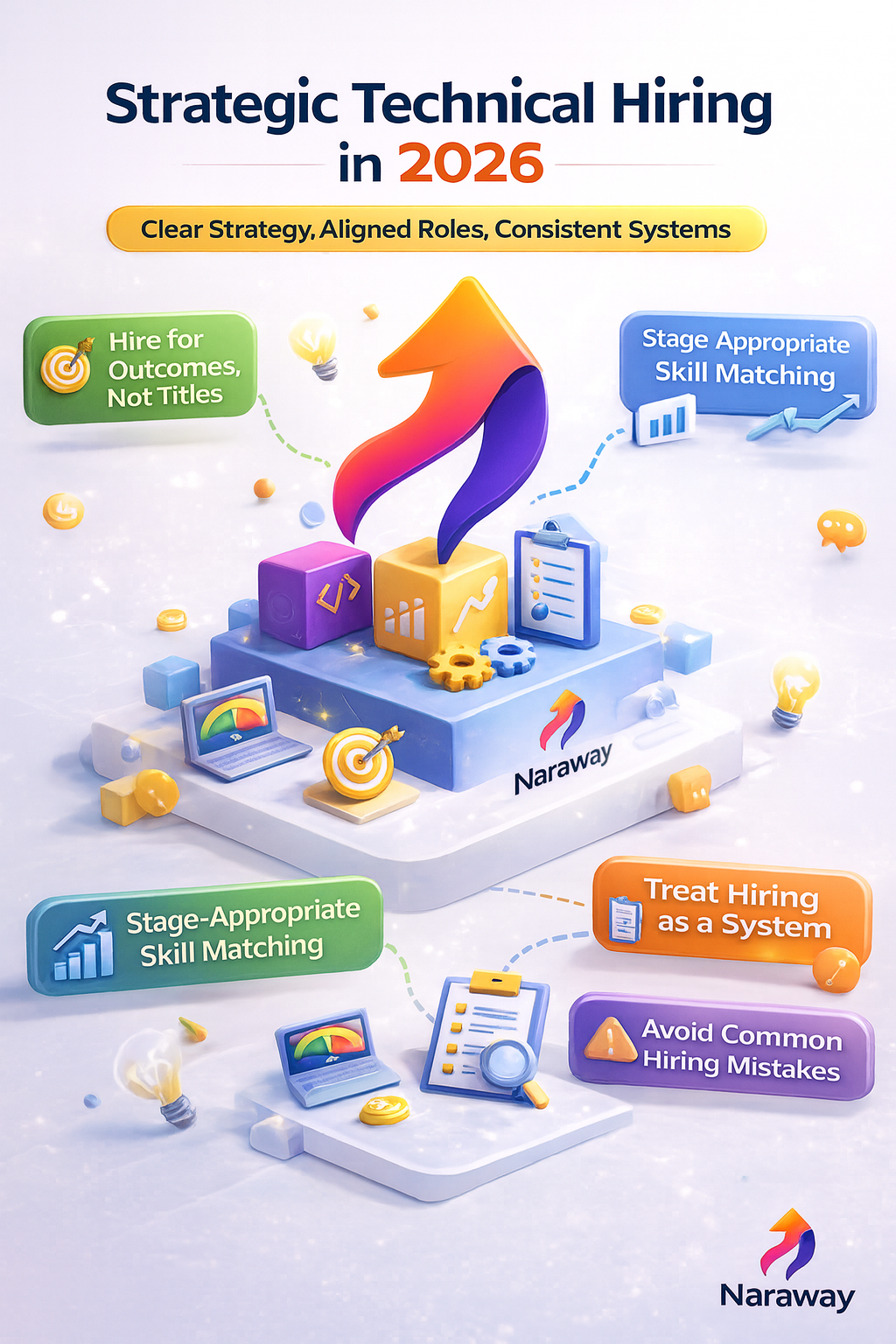
This article breaks down the 10 job search strategies that actually work in 2026—based on how hiring really happens, not how we wish it worked. These aren't motivational platitudes or LinkedIn hacks. They're execution-focused strategies aligned with modern recruiting reality.
1. Role-Specific, Not Company-Specific Applications
What it is: Tailoring applications to specific role requirements and outcomes rather than just company brand.
Why it works now: Recruiters hire for roles, not companies. When you apply to "Google" generically, you're competing against thousands doing the same. When you apply to "Product Marketing Manager - Developer Tools at Google" with clear evidence you understand developer tool positioning, you're in much smaller pool.
Role-specific applications demonstrate: you understand what job actually requires, you have relevant experience solving similar problems, you researched role beyond job title. This clarity signals execution readiness.
Why old methods fail: "I want to work at [prestigious company]" was never hiring criteria. Companies hire to solve problems. Applying because "company is great" without connecting to specific role outcomes signals: lack of focus, unclear career direction, prestige-seeking over problem-solving.
Execution clarity beats brand obsession. Demonstrate you understand role's challenges and have solved similar ones. That gets interviews.
2. Outcome-Driven Resumes (Not Skill Lists)
What it is: Structuring resume around measurable outcomes achieved, not responsibilities held or skills possessed. get your company registered and start building the team you need with Naraway
Why it works now: Recruiters scan for impact, not effort. "Managed social media accounts" describes activity. "Grew Instagram following from 5K to 50K in 6 months driving 200 qualified leads monthly" describes outcome. Second version answers "what did this person actually accomplish?"
Outcome-driven resumes signal: results orientation, measurement discipline, business impact awareness. These are execution qualities every employer seeks.
Why old methods fail: Listing responsibilities ("Responsible for customer support") or skills ("Proficient in Excel") doesn't differentiate. Everyone lists similar responsibilities. Skills are table stakes, not differentiators. Recruiters need understanding of what you achieved, not what you were supposed to do.
Key insight: responsibilities don't convert to interviews. Execution outcomes do. Show what changed because of your work, not what your job description said.
3. Fewer Applications, Higher Signal Quality
What it is: Submitting 10 carefully researched, deeply customized applications instead of 100 generic ones.
Why it works now: Mass applying triggers filters—both automated and human. ATS systems detect when resume uses identical wording across many applications. Recruiters recognize generic cover letters. High volume signals desperation, not selectivity.
Focused applications stand out because: customization requires research showing genuine interest, specificity demonstrates role understanding, quality signals professionalism and attention to detail.
Why old methods fail: "Apply everywhere and something will stick" worked when human recruiters gave each application equal attention. Now, algorithms prioritize signal quality. Generic applications processed as spam. Real candidates get interviews. Everything else gets filtered.
Counter-intuitive but realistic: fewer applications, better targeting, higher conversion. Quality over quantity isn't just good advice—it's algorithmic reality in 2026.
4. LinkedIn as Signal Platform, Not Job Board
What it is: Using LinkedIn to demonstrate expertise and execution capability rather than just applying through platform. Naraway handles startup registration so your hiring can begin on a proper legal foundation
Why it works now: Passive LinkedIn presence—profile with experience listed—doesn't create opportunities. Active demonstration of expertise does. This means: thoughtful comments on industry posts, sharing insights from your experience, consistent engagement with relevant content, clear positioning around specific domain.
Recruiters search LinkedIn for candidates with demonstrated expertise, not people merely listing skills. Visible execution creates inbound opportunities.
Why old methods fail: Using LinkedIn only as job board means applying through platform expecting results—same low success rate as other job boards because everyone does this. Platform value comes from being found by recruiters searching for expertise, not from applying to posted roles.
LinkedIn effectiveness requires shifting from "applying to jobs" to "building searchable evidence of expertise." Comments, posts, and engagement create discoverability. Applications alone don't.
5. Direct Outreach With Context
What it is: Reaching out directly to hiring managers or team members with specific context about why you're interested and qualified.
Why it works now: Generic cold messages get ignored: "Hi, I saw your company is hiring. I'm interested." Contextual outreach gets responses: "Hi [Name], I saw [Company] is hiring for [Role]. I recently [relevant experience]. I noticed [specific company initiative]. I'd love to discuss how my experience with [specific skill] could help."
Context demonstrates: research beyond job posting, genuine interest in company/role, relevant experience connection, respectful approach acknowledging recipient's time.
Why old methods fail: Most people either don't do outreach (missing opportunity) or send generic templates (wasting opportunity). Generic messages ignored because they feel mass-produced. Recipient can tell message could go to anyone.
Explain why you're reaching out to them specifically, about this role specifically, now specifically. Context transforms cold outreach into warm introduction.
6. Networking Through Value, Not Asking
What it is: Building professional relationships by sharing insights, offering help, or contributing value before requesting favors.
Why it works now: Traditional networking advice: "Ask for informational interviews. Request referrals. Seek advice." This creates transaction-first relationships making recipients feel used. Value-first networking reverses this: share relevant article, offer perspective on challenge they mentioned, introduce them to useful connection.
Value-first interactions build: genuine relationships not transactional favors, reputation as helpful connector, reciprocity naturally without explicit asking.
Why old methods fail: "Can I pick your brain?" or "Could you refer me?" as first interaction creates obligation before relationship. People naturally resist being asked for favors by strangers. Even when they comply, relationship starts on extractive foundation.
Reframe networking entirely: connect by giving value, not requesting it. Job opportunities emerge from relationships, not from asks. Build relationships through contribution. Opportunities follow naturally.
7. Proof of Work Over Certificates
What it is: Demonstrating capability through portfolio, case studies, GitHub repos, writing samples, or project examples rather than just listing certifications.
Why it works now: Certificates prove course completion. Proof of work proves execution capability. Recruiters hiring for results, not credentials. Portfolio showing actual projects completed demonstrates: problem-solving approach, quality standards, technical capability, communication skills through work itself.
Real execution signals answer "Can this person do the job?" directly. Certificates answer "Did this person take a course?" indirectly.
Why old methods fail: Credential inflation makes certificates less differentiating. Everyone has certifications. Recruiters can't distinguish strong candidates from weak ones through certificates alone. Need evidence of actual execution quality.
Especially valuable for: career changers without traditional credentials, freshers without extensive experience, self-taught professionals, anyone whose work quality exceeds credential signals. Show the work. Let execution speak.
8. Understanding Hiring Timelines
What it is: Recognizing that hiring processes typically take 4-8 weeks and silence doesn't always mean rejection.
Why it works now: Candidates often give up after one week of silence, assuming rejection. Reality: hiring moves slowly. Applications take time to review. Interview scheduling requires coordination. Multiple stakeholders create delays. Understanding realistic timelines reduces anxiety and prevents premature abandonment.
Realistic expectations enable: appropriate follow-up timing (1-2 weeks, not 2 days), parallel applications while waiting, emotional resilience during process, strategic patience instead of desperate urgency.
Why old methods fail: Expecting immediate responses leads to: sending multiple follow-ups appearing desperate, assuming rejection prematurely, emotional exhaustion from perceived constant rejection, giving up on strong opportunities due to normal delays.
Silence doesn't equal rejection. It often equals "still processing" or "scheduled interviews next week." Patience informed by realistic timelines improves outcomes and reduces stress.
9. Optimizing for Recruiter Filters (Structure & Clarity)
What it is: Structuring resume and application materials for both ATS systems and human recruiters through clarity and relevant detail.
Why it works now: ATS systems scan for keywords, formatting, and structure. Human recruiters scan for quickly-identifiable relevant experience. Both benefit from: clear section headers, relevant keywords naturally incorporated, consistent formatting, specific measurable outcomes, logical experience progression.
Optimization isn't keyword stuffing—it's making relevant experience immediately obvious to both algorithms and humans.
Why old methods fail: Complex formatting confuses ATS. Vague descriptions give humans no hooks. Missing keywords filter you out algorithmically. Poor structure forces recruiters to work hard understanding fit—they won't.
Make relevance obvious. Use industry-standard terms. Structure clearly. Quantify outcomes. This isn't gaming the system—it's respecting how hiring actually works and making evaluation easy.
10. Treating Job Search as System
What it is: Approaching job search with systematic tracking, continuous refinement, and learning loops rather than random effort.
Why it works now: Systematic job search means: tracking where you apply and outcomes, analyzing which applications get responses, refining approach based on feedback, maintaining consistent effort cadence, learning from each interaction.
System-based approach enables: identifying what works through data, continuous improvement, maintaining momentum, avoiding repeated mistakes, measuring progress objectively.
Why old methods fail: Random effort—applying whenever feeling motivated, no tracking of outcomes, no analysis of patterns, emotional reactivity to results—prevents learning and improvement. Can't improve what you don't measure. Can't learn from patterns you don't track.
Strong closing strategy: treat job search as execution problem requiring systematic approach. Track, measure, refine, improve. Job search success correlates with systematic discipline, not just effort volume.
Why Most Job Searches Fail in 2026
At Naraway, we see job search failures as execution problems, not talent problems. Most candidates struggling with job search aren't unqualified—they're unclear in execution signaling.
Job search failures come from three execution gaps: Unclear execution signals. Resume lists responsibilities not outcomes. Cover letter generic not role-specific. LinkedIn profile passive not demonstrative. Applications lack clarity about what candidate actually accomplished and how it connects to target role. Weak signals filtered out before talent assessed.
Weak role alignment. Applying broadly hoping something fits. No clear target role, industry, or company type. Scattered applications across unrelated positions. Lack of focus signals: unclear career direction, desperation, inability to assess fit. Recruiters want candidates who know what they want and why they're qualified. Misalignment visible immediately.
Random effort. Applying when motivated, not systematically. No tracking of what works. No refinement based on outcomes. Emotional reactivity creating inconsistent execution. Random approach prevents: learning from experience, identifying effective patterns, maintaining consistent progress, measuring improvement.
We frame job search success as execution system requiring: clear role targeting, outcome-driven evidence, systematic approach, continuous refinement. Talent matters. But execution clarity determines whether talent gets recognized. Strong candidates with weak execution signals get filtered. Average candidates with strong execution signals get interviews.
What Job Seekers Should Fix Before Applying to More Roles
Three foundational improvements that transform job search effectiveness:
Role clarity. Define target role specifically: not "marketing jobs" but "B2B SaaS content marketing manager in 20-200 person companies." Specificity enables: relevant experience highlighting, clear value proposition, focused company targeting, meaningful networking. Without role clarity, every application requires figuring out fit from scratch. With clarity, applications become customization of clear story.
Execution proof. Assemble evidence of capability: portfolio if applicable, case studies of projects completed, measurable outcomes from previous roles, writing samples or work examples. Proof enables recruiters to evaluate fit based on actual work quality rather than credential signals. Especially critical for career changers and non-traditional backgrounds. Show work > list credentials.
Messaging discipline. Develop clear concise articulation of: what you do, what outcomes you create, what problems you solve, why you're pursuing target role. Messaging discipline ensures: resume communicates clearly, LinkedIn profile positioned sharply, outreach messages land effectively, interviews start from shared understanding. Lack of messaging clarity creates confusion. Recruiters won't work hard understanding your story. Make it obvious.
These aren't templates or tactics—they're foundational execution improvements. Without foundations, tactics feel like random effort. With foundations, tactics become systematic implementation of clear strategy.
Final Reframe: Job Search Success Isn't About Trying Harder—It's About Executing Smarter
Job searching in 2026 requires understanding fundamental shift in how hiring happens. Volume-based approaches fail because algorithms and recruiters filter aggressively. Generic applications don't differentiate when everyone submits them. Credentials matter less than execution proof when hiring for results.
Success comes from: role-specific targeting showing clear fit, outcome-driven evidence proving capability, systematic execution enabling continuous improvement, signal quality over submission volume.
This isn't about gaming the system or hacking algorithms. It's about aligning job search execution with hiring reality. Recruiters want making hiring decisions easy. Your job as candidate: make evaluating your fit easy through clarity, evidence, and relevance.
If job search isn't working—low response rates, few interviews, lots of rejections—problem likely isn't your qualifications. It's execution signal quality. Fix signals: clarify targeting, strengthen evidence, improve messaging, systematize approach. Results improve when execution improves.
Modern job search rewards execution clarity, not effort volume. Work smart by signaling clearly. That's what actually works in 2026.
Build Career Systems Through Execution Excellence
At Naraway, we focus on helping professionals and organizations build execution systems that demonstrate capability clearly. Strong job searches and strong hiring both reward execution clarity over noise.
Learn About Our Approach