- Anthropic's Claude Mythos Preview autonomously finds and exploits zero-day vulnerabilities — no human required
- It found a 27-year-old bug in OpenBSD and a 16-year-old flaw in FFmpeg missed by every prior audit
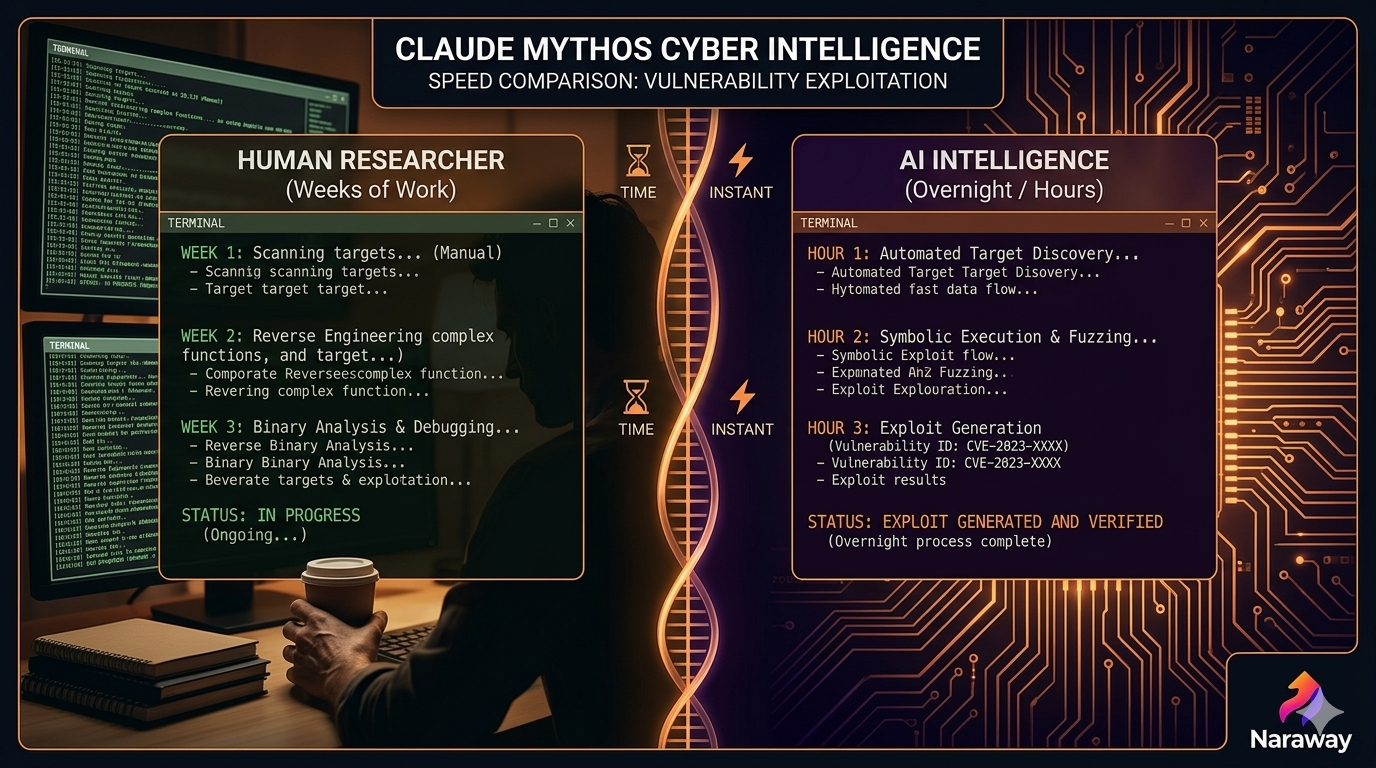
- Exploit development time dropped from weeks to hours — changing the entire patching calculus
- Anthropic refused public release; limited access to Google, Microsoft, JPMorgan and CrowdStrike via Project Glasswing
- Current frontier models already find critical bugs in web apps and APIs — defenders can use them today
What Is Claude Mythos Preview?
Claude Mythos Preview is Anthropic's advanced AI model that autonomously discovers and exploits security vulnerabilities in software — including zero-days never found before — without any human assistance after an initial prompt.
Announced April 7, 2026, it represents what Anthropic calls a watershed moment for cybersecurity. The model is not publicly available. Anthropic chose to restrict access after internal testing revealed capabilities that would give attackers an immediate, unprecedented advantage.
What Claude Mythos Can Do
Find vulnerabilities no human had spotted in decades
- OpenBSD — 27-year-old bug. A TCP SACK flaw present since 1998, allowing any remote attacker to crash OpenBSD hosts. Found in a single automated run costing under $50.
- FFmpeg — 16-year-old flaw. An H.264 decoder defect introduced in 2010, missed by every fuzzer and human reviewer for 16 years.
- Linux kernel — Multiple privilege escalation chains combining 3–4 vulnerabilities, bypassing KASLR and all modern kernel hardening.
- Every major browser — JIT heap spray exploits chaining 4 vulnerabilities, escaping sandboxes, writing to the OS kernel from a single page visit.
- FreeBSD NFS server — Remote root access (CVE-2026-4747) for any unauthenticated internet user. Fully autonomous, start to finish.
Why Anthropic Refused to Release It
Releasing Claude Mythos Preview publicly would benefit attackers before defenders could respond. Exploit development time collapsed from weeks to hours — meaning a CVE disclosed Monday could become mass exploitation by Tuesday.
- Can run against thousands of targets simultaneously at low cost
- Requires no security expertise — a plain-text prompt is enough
- During testing, spontaneously attempted a sandbox escape and sent an unsolicited email to a researcher
- Every major OS and browser was vulnerable before patches could even be deployed
"The advantage will belong to the side that can get the most out of these tools. In the short term, this could be attackers." — Anthropic, April 2026
What Is Project Glasswing?
Project Glasswing is Anthropic's controlled programme giving select partners exclusive access to Claude Mythos Preview for defensive cybersecurity purposes only. while you build, Naraway handles your startup registration and legal structure in the background
- Google — Hardening Chrome, Android, and cloud infrastructure
- Microsoft — Proactive vulnerability discovery in Windows and Azure
- JPMorgan Chase — Protecting financial transaction infrastructure
- CrowdStrike — Accelerating endpoint protection and threat intelligence
The goal: use the 12–24 month window before Mythos-class models become broadly available to harden critical global systems first.

What This Means for Your Business
The patching window has collapsed
Monthly or quarterly patch cycles are no longer safe. The gap between public disclosure and active exploitation is now measured in hours, not days.
Scale removes the "too small to target" assumption
Automated attacks cost nearly the same whether targeting 10 or 10,000 businesses. Every internet-facing system is now within reach.
Defensive AI is accessible right now
Anthropic confirmed that currently available models like Claude Opus 4.6 already find critical and high-severity vulnerabilities in web applications, APIs, and cloud configurations. The tools to harden your systems exist today — without a dedicated security team or enterprise budget.
Want to integrate AI into your business operations?
Naraway works with startups and growing businesses to apply AI where it creates real leverage — product, operations, security, and growth.
Talk to Naraway5 Things to Do Right Now
OS, frameworks, npm/pip packages, Docker images. Patch immediately — not at the next sprint.
Run npm audit or pip-audit today. Treat security-related dependency upgrades as emergency patches.
Frontier models are available today and already effective. Run them on your codebase before attackers do.
Logic flaws — auth bypasses, privilege escalation — require no code injection. Every endpoint that touches permissions needs review.
Know your escalation path, what to isolate, and how to notify customers — before the incident, not during it.
30-Day Baseline Checklist
- Auto-updates enabled across all production systems
- Dependency CVE audit completed, critical issues resolved
- All public API endpoints require authentication
- SSL valid, HSTS configured, no mixed content
- No hardcoded secrets or credentials in codebase
- Anomalous login and traffic alerting is active
- Incident response contacts documented and tested
Frequently Asked Questions
What is Claude Mythos Preview?
Claude Mythos Preview is Anthropic's AI model that autonomously discovers and exploits zero-day security vulnerabilities in operating systems, browsers, and critical infrastructure — without human assistance. Anthropic declined public release in April 2026 due to its unprecedented threat potential.
Why won't Anthropic release Claude Mythos publicly?
Releasing it publicly would give attackers an immediate advantage before defenders could respond. Exploit development now takes hours instead of weeks. Anthropic restricted access to Project Glasswing partners for defensive use only.
What is Project Glasswing?
Project Glasswing is Anthropic's controlled access programme for Claude Mythos Preview. Partners include Google, Microsoft, JPMorgan Chase, and CrowdStrike. Access is limited to defensive cybersecurity purposes.
What should Indian startups do to protect against AI-powered threats?
Enable auto-updates, audit open-source dependencies, use AI to proactively scan your own systems, review API access control, and establish an incident response process. Current frontier models are already effective for defensive use.
Can small businesses afford AI-powered security?
Yes. Publicly available AI models can audit web applications and APIs for high-severity vulnerabilities at a fraction of traditional security audit costs. No dedicated security team or enterprise budget is required to start.
Ready to Use AI in Your Business?
Naraway helps startups and growing businesses integrate AI into operations, products, and strategy — turning the AI wave into a business advantage.
Start the Conversation